
How to Start an Airbnb: A Complete Guide From a Host With 8 Listings
From legal setup and pricing to furnishing and guest messaging: everything we learned scaling to 8 properties with a 4.96 rating.
 verified

- Treat hosting as a small business with systems, not a side hobby with a nice apartment.
- Get permission and legal basics right before you buy a single sheet.
- Underwrite every property with real numbers: ADR, occupancy, costs and payback.
- Spend on what guests touch daily (bed, shower, Wi-Fi) and buy durable, replaceable items.
- Price dynamically, but with floors, minimum stays and rules you set yourself.
- Automate the repeatable parts of guest communication and keep the human touches.
- Reviews are the engine. A 4.96 comes from consistent operations, not luck.
Introduction: What This Guide Is, and Who It's For
My partner and I started hosting in February 2026. Today we run 8 listings with a 4.96 average rating across 82 reviews. We began with just one property and never expected to make a profit from it. Our only goal was to cover the rent and maintenance costs so that we wouldn’t have to pay anything out of our own pockets. In the back of our minds, we even had a backup plan: if nothing worked, we would move in ourselves. Fast forward to today, and we manage 8 listed properties and are still expanding.
This guide is the blueprint I'd hand to a friend who wanted to launch a boutique Airbnb and run it like a business. It covers the model, the legal foundation, choosing a property, the money, furnishing, photos, pricing, automation, operations, reviews and scaling. It's based on what I did, including what went wrong.
A note on scope. The structure here is global. Laws, taxes and permits differ by country, state and city, and they change. If you host in India, read my Navigating Form C & Foreign Guest Registrations guide and the India Hosting Hub. Nothing here is legal, tax or financial advice.
Choose Your Model: What "High-ADR Boutique" Actually Means
Two numbers matter more than anything else, so get them straight first.
- ADR (average daily rate): the average price you earn per booked night.
- Occupancy: the share of available nights that are booked.
- RevPAR (revenue per available night): ADR multiplied by occupancy. It's the fairest way to compare strategies.
A boutique, high-ADR strategy aims for a higher nightly rate by offering a distinctive, well-finished space instead of competing on price. It works when you can credibly deliver more than the average listing: better design, better beds, better location detail and better service. It doesn't work if the property is ordinary and you simply raise the price.
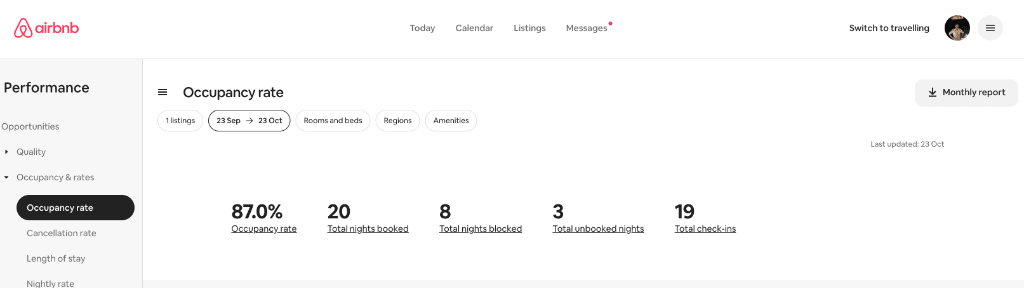
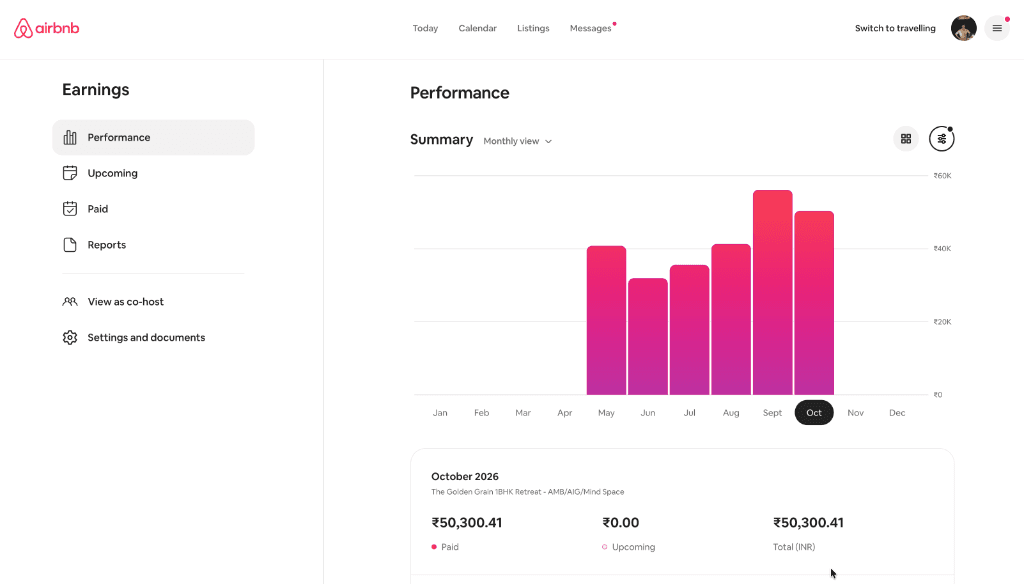
A high ADR with low occupancy can earn less than a mid-range rate with strong occupancy, so decide on RevPAR, not ADR alone. Here is a real example from our own 1BHK unit (*The Golden Grain Retreat*): with an 87.0% occupancy rate across 20 booked nights, the property generated ₹50,300.41 in monthly revenue.
Three ways to run a unit:
| Model | Pros | Cons |
|---|---|---|
| Own the property | Full control, appreciation, no landlord risk | Highest capital needed |
| Rent it (rental arbitrage) | Lower capital | Needs explicit landlord permission, lease risk, tighter margins |
| Co-host or manage for owners | Low capital, learn fast | You earn a share, not the whole margin |
Build the Legal and Financial Foundation First
This is the least glamorous step, and the one that can end your business. Handle it before you commit to a property.
Permission and rules
- Landlord and lease: if you rent, get written permission to host short stays. A verbal yes isn't enough.
- Building rules: apartment associations, housing societies, homeowners' associations and condo bylaws can ban or restrict short-term rentals.
- Local regulation: many cities require registration, a licence, a night cap, a safety inspection or tax collection. Check your local authority's official website, not a blog post (including this one).
- Platform requirements: Airbnb may ask for local registration details or tax information in some places. Read the host requirements for your region.
Insurance
Standard home or renters insurance often excludes paying guests. Ask your insurer directly, and read what Airbnb's host protections cover and exclude. Many hosts add a short-term-rental policy or commercial liability cover.
Tax and record keeping
Rental income is generally taxable, and some places add occupancy or lodging taxes. Keep a separate bank account and card for hosting, save every receipt, and track revenue and expenses per property from day one. It makes tax time, and your decisions on which property earns what, far easier.
Contracts and policies
Prepare:
- House rules (short, clear, enforceable)
- A guest agreement where applicable in your market
- Written agreements with cleaners and contractors
- A privacy approach for cameras and monitoring devices. Rules on cameras and noise monitors differ by region and by Airbnb's own policy, and you must disclose them. Never put a camera inside a living or sleeping area.
Choose the Market and Property with Numbers, Not Feelings
A gorgeous property in a weak market is a bad investment. Underwrite before you buy or sign.
Research the demand
- Look at comparable listings: similar size, quality and location
- Note their nightly rates across weekdays, weekends, holidays and off-season
- Check how far ahead nearby calendars are booked, and how many reviews similar listings have
- Identify demand drivers: tourism, business travel, events, hospitals, universities, weddings
- Note supply: how many comparable listings exist, and how crowded the niche is
- Consider seasonality honestly, and build a plan for your slowest months
Run the basic underwriting
For each candidate property, estimate:
- Realistic ADR and occupancy (use the middle of what comps achieve, not the top)
- Monthly revenue
- All costs: rent or mortgage, utilities, cleaning, supplies, insurance, platform fees, maintenance, management and taxes
- Startup costs: furnishing, setup and deposits
- Monthly profit, annual ROI and payback period
- Break-even occupancy, meaning the occupancy where profit is zero
Use my free Airbnb Profit & ROI Calculator to run the numbers.
Rule of thumb: if the deal only works at your best-case occupancy, it doesn't work.
Pick the property for the guest
Features that tend to matter: location convenience, sleep quality, natural light, a real workspace, parking where relevant, a layout that sleeps the right number comfortably and noise levels. Features that look good in photos but cost you a lot in cleaning and repairs (delicate finishes, huge glass surfaces, light-coloured fabrics) deserve a second thought.
The Startup Budget
Budget by category, and add a buffer. Costs vary enormously by market and quality, so use your own quotes.
| Category | What to include |
|---|---|
| Furnishing | Beds, mattress, sofa, dining, desk |
| Appliances | AC, fridge, washing machine, TV |
| Bedding and bath | 3 sets per bed, towels, mattress protectors |
| Kitchen | Cookware, crockery, glasses, small appliances |
| Consumables and supplies | Toiletries, cleaning products, paper goods |
| Technology | Wi-Fi, smart lock, detectors, lighting |
| Decor | Art, plants, lamps, rugs |
| Photography | Professional shoot or DIY gear |
| Buffer | 10 to 15% for what you forgot |
Furnish for Durability, Not Just Looks
Commercial-grade furnishing means choosing items built for heavy, repeated use and easy replacement. A living room in a home sees a few people. An Airbnb sees a new set of people every few days.
Priorities, in order
- The bed: a good mattress, a mattress protector, quality pillows and a clean duvet. Sleep quality drives reviews more than any decor.
- The bathroom: strong water pressure, hot water, good towels, a clean and well-lit space.
- Climate control and noise: reliable heating or cooling, blackout curtains and decent sound insulation.
- Wi-Fi and workspace: a fast, reliable connection and a proper desk and chair, since remote workers book longer stays.
- Kitchen: a functional, fully stocked kitchen that matches the property's positioning.
Specs to look for
- Fabrics that are washable, stain-resistant and robust (performance fabrics, darker or patterned tones in high-use areas)
- Solid frames and fixed joints over flat-pack furniture that loosens
- Hard-wearing flooring and rugs that can be cleaned or replaced cheaply
- Standardised items: the same sheets, towels and fixtures across properties make restocking, replacement and training simple
- Wipeable surfaces in the kitchen and bathroom
Par levels
A par level is the minimum stock you keep per property so that a turnover never depends on laundry drying. A common starting point is three sets of linens per bed (one on the bed, one in the wash, one ready), with extra towels and spare basics on site. Adjust to your turnover frequency.
Standardise as you scale
When I went from 1 to 8 properties, standardising became the thing that kept quality consistent: a design template, a supplier list, a stocking list and an inspection checklist, all reusable.
For room-by-room inspiration, see my decor guide.
Photos and the Listing
Photos
Photos decide whether people click. For a boutique positioning, they also have to justify the price.
- Shoot in daylight with every room styled and clean
- Use a wide lens, level horizons and straight vertical lines
- Use wide lens wisely to give the sense of space but don't create distorted spaces
- Photograph every room, the entrances, the outdoor areas and distinctive details
- Lead with your best image, usually the main living space or the most striking bedroom
- Don't misrepresent the space. Guests who feel misled leave reviews that cost you more than the booking is worth
- Consider a professional photographer for flagship properties. My first listing was shot on iphone 12 pro and turned out to be great. So you can decide yourself.
The listing
- Title: lead with what's distinctive and specific, such as the style, a feature or the location advantage
- Description: open with the best three selling points, then the space, the surroundings and getting around. Be upfront about stairs, noise or anything unusual
- Amenities: list every amenity you really have, since guests filter on them
- House rules: brief, specific and friendly
- Cancellation policy: choose based on your market and risk tolerance. Many hosts begin more flexible to gain bookings and reviews, then tighten
Pricing: Use the Tools, Keep the Rules
Start with the goal
Your first goal isn’t the maximum price. It’s reviews. A new listing with no reviews struggles to justify a premium, so many hosts price competitively at launch, collect their first reviews, and then raise their rates. Airbnb also offers a New Listing Promotion, which takes 20% off your nightly price for your first three bookings. I’d suggest setting the price you actually want to charge and letting the promotion apply the discount, instead of lowering your base price yourself. To qualify, your listing needs fewer than three bookings and Smart Pricing must be turned off. Once those bookings are complete, the promotion ends and your regular price applies.
Dynamic pricing tools
Pricing tools adjust your rates automatically using demand signals such as seasonality, local events, lead time and comparable listings. Well-known options include PriceLabs, Wheelhouse and Beyond. For starter you can adjust your pricing manually from the app in the price detail section or from the calander itself. This will give you a better picture of weekday and weekend pricing and over the months about the peak season and slow season.
- Minimum price (floor): the lowest rate where the stay still makes money after all costs
- Maximum price: a ceiling that protects you from absurd spikes that won't convert
- Minimum stay: shorter stays are more profitable per night but cost more in cleaning, and longer minimums can reduce bookings. Test both
- Gap-night rules: discounts for single-night gaps between bookings
- Last-minute and far-out rules: discounts for unbooked dates approaching, and a premium for peak dates booked early
- Length-of-stay discounts: weekly and monthly rates if you want longer stays
- Event and holiday overrides: a manual check on your local calendar
Review your numbers monthly
Track ADR, occupancy, RevPAR, booking lead time and average stay per property. If occupancy is too high, you may be underpriced. If it's too low, check price, photos, reviews and listing quality before assuming the market is weak. During the low season we didn't adjusted the price for which resulted in lesser bookings. Its better to have a booking than no booking.
Automate the Repeatable, Personalise the Rest
Automation is how one person runs 8 properties without losing the quality guests notice.
| Timing | Message | Purpose |
|---|---|---|
| On booking | Warm welcome and confirmation | Sets the tone, answers early questions |
| Before arrival (a few days) | Practical details and local tips | Reduces pre-arrival questions |
| Day before | Check-in instructions, access code, Wi-Fi, parking | Prevents arrival problems |
| After check-in | Short "is everything okay?" or "I hope you are liking the stay" | Catches issues while you can still fix them |
| Mid-stay (longer stays) | Light touch check-in | Prevents small problems turning into complaints |
| Day before checkout | Check-out steps | Smooth, consistent turnovers |
| After checkout | Thank-you and review nudge | Encourages a review |
Write messages in your own voice, and personalise names, dates and any special requests. Save templates, and review them regularly. You can refer to our message template here under Guest message template
Automated guest messaging flow
Tools to consider
- Property management system or channel manager: syncs calendars, centralises messages and automates workflows
- Smart locks or lockbox: unique codes per stay, no key handoff, no lost keys
- Cleaner scheduling: automatic tasks triggered by bookings and checkouts
- Noise and occupancy sensors: only where permitted, disclosed and privacy-safe
- A shared tracking sheet or dashboard: one place for every property's numbers
What not to automate
Complaints, sensitive situations, damage conversations and anything where tone matters. Reply personally.
Operations: Cleaning, Inspections and Maintenance
For most hosts, cleaning quality is the single strongest influence on rating. Build it as a system.
Cleaning
- A written, room-by-room checklist for every property
- Photo proof after each clean (also useful for any dispute)
- A primary cleaner and a backup for every property
- Clear pay terms and expectations, in writing
- Regular spot checks, even when you trust the team
- A policy for reporting damage, missing items and low stock
See my cleaning guide and download the free cleaning checklist.
Inspections and maintenance
- A recurring inspection schedule for each property, including appliances, plumbing, locks, detectors and wear
- A maintenance reserve built into your budget
- A short list of reliable contractors for plumbing, electrics, appliances and emergencies
- A response plan for urgent problems like no hot water, lockouts and leaks
Write SOPs
Standard operating procedures (SOPs) turn knowledge in your head into something a cleaner, co-host or assistant can follow. Start with turnover, restocking, check-in problems and maintenance escalation. Here is an example from our own properties: guests weren’t familiar with the lockbox and often struggled to open it and get the key at check-in. So we made a short video showing how to open the lockbox and shared it with guests when they checked in, which helped a lot.
Reviews: How a 4.96 Actually Happens
A high rating is the result of consistent execution across many small things.
- Accuracy: the listing matches reality. Under-promise and over-deliver
- Cleanliness: the biggest rating driver, and the one most under your control
- Communication: fast, clear and friendly
- Check-in: easy and well-explained
- Value: guests feel they got more than they paid for
- Small touches: a welcome note, a local recommendation list, a thoughtful extra
What I changed after reviews:
We found we didn't had enough cutleries so we added them
Photographs from every corner are required. We found some guests were finding the property smaller than expected so we added pictures from every corner of the house for better clarity of the space.
Handling a bad review
- Take a breath before replying
- Respond politely and factually, without arguing
- Fix the problem if it was real, and say so
- Use the feedback to update your checklist or listing
Check Airbnb's current Superhost criteria in your Airbnb account and track them yourself. I earned my Superhost status after 4 months of hosting. Read the full Superhost guide here
Scaling from 1 to 8 Properties
Scaling is mostly about systems, not about finding more properties.
- Prove one property first. Don't add a second until the first works: a steady rating, positive cash flow and a repeatable process.
- Document everything before you scale: checklists, SOPs, supplier lists, message templates and design standards.
- Standardise furniture, linens, supplies and processes.
- Hire and delegate the work that doesn't need you: cleaning, laundry, maintenance and some guest messaging, with clear expectations and quality checks.
- Watch your numbers per property, and be willing to exit a weak one.
- Avoid overextending. Keep cash reserves for empty months, repairs and surprises.
Damage, Risk and Protecting Yourself
- Read Airbnb's host protection terms carefully, including what they exclude and how claims work in your region
- Document the condition of each property with dated photos before and after stays
- Keep records of messages, receipts and repair quotes
- Report any damage promptly, following the platform's process and deadlines
- Insure for the risks the platform doesn't cover
- Screen bookings sensibly, and treat red flags such as vague messages or pressure to move off-platform with caution
I'll cover claims in detail in my damage claims guide.
Mistakes to Avoid
- Signing a lease or buying without checking the rules
- Underwriting at best-case occupancy
- Overspending on decor and underspending on the bed, bathroom and cleaning
- Pricing with no floor, or accepting every booking at any price
- Having no backup cleaner
- Scaling before the first property runs smoothly
- Mixing hosting money with personal money
- Ignoring maintenance until something breaks mid-stay
- Avoiding guests negative or helpful reviews
- Arguing with the guests on complaints
A Realistic Launch Timeline
| Phase | What to do |
|---|---|
| Weeks 1 to 2 | Check permission and local rules, get professional advice on structure and tax, research the market |
| Weeks 2 to 4 | Underwrite candidate properties and choose one |
| Weeks 4 to 8 | Secure the property, order furnishings, set up insurance, tools and accounts |
| Weeks 8 to 10 | Install, style and clean, then take photos |
| Week 10 | Publish the listing with competitive launch pricing |
| First 90 days | Collect reviews, refine pricing and messaging, build SOPs |
| After that | Review the numbers monthly and decide whether to scale |
Frequently Asked Questions
How do I start an Airbnb with no experience?expand_more
Start with the permission and rules check, underwrite one property carefully, furnish it for durability and comfort, and launch with competitive pricing to earn early reviews. Systems matter more than prior experience.
How much money do I need to start an Airbnb?expand_more
It depends on your market, the property and your standard. Budget for furnishing, bedding, kitchen, technology, photography, permits and a buffer, and use a calculator to check your payback period before committing.
What is a good ADR for an Airbnb?expand_more
There is no universal figure. A good ADR is one that your market supports at an occupancy that makes the property profitable. Compare similar listings nearby, and judge by RevPAR, not ADR alone.
Do I need an LLC or company to host?expand_more
It depends on your country, your liability and your tax situation. Speak to a qualified accountant or lawyer, ideally before you add a second property.
Should I use dynamic pricing software?expand_more
Most multi-property hosts do, because it saves time and reacts to demand. Set your own minimum, maximum and stay rules, and review the results monthly.
How do I get a 4.96 rating?expand_more
Accurate listings, spotless cleaning, quick communication, easy check-in and small thoughtful touches, repeated consistently. Fix problems at the source whenever a review points to one.
How many properties can one host manage?expand_more
It depends on your systems, team and how far apart the properties are. Documented processes, standardised properties and reliable cleaners and contractors make a bigger difference than hours worked.
Next Steps
- 1Check the rules and permissions for your location
- 2Run the numbers in my Airbnb Profit & ROI Calculator
- 3Download the free startup checklist
- 4Read the deeper guides on decor, photography and cleaning
- 5Hosting in India? Continue with Navigating Form C & Foreign Guest Registrations and Airbnb Wi-Fi & Power Backup in India
Get The Complete 48-Point Furnishing & Sourcing Spec Sheet
Turnover checklists, maintenance schedules, and essential furnishing specs used across our 8 properties.
Written by Sagar Kashyap
Hi, I’m Sagar. My partner and I started hosting in February 2026, and today we run 8 listings with a 4.96 average rating across 82 reviews. I’m also a software engineer, so I like turning hosting problems into simple systems, checklists and free tools. I write down what actually worked for us, including the mistakes.
Related Field Guides
 Decor & Staging
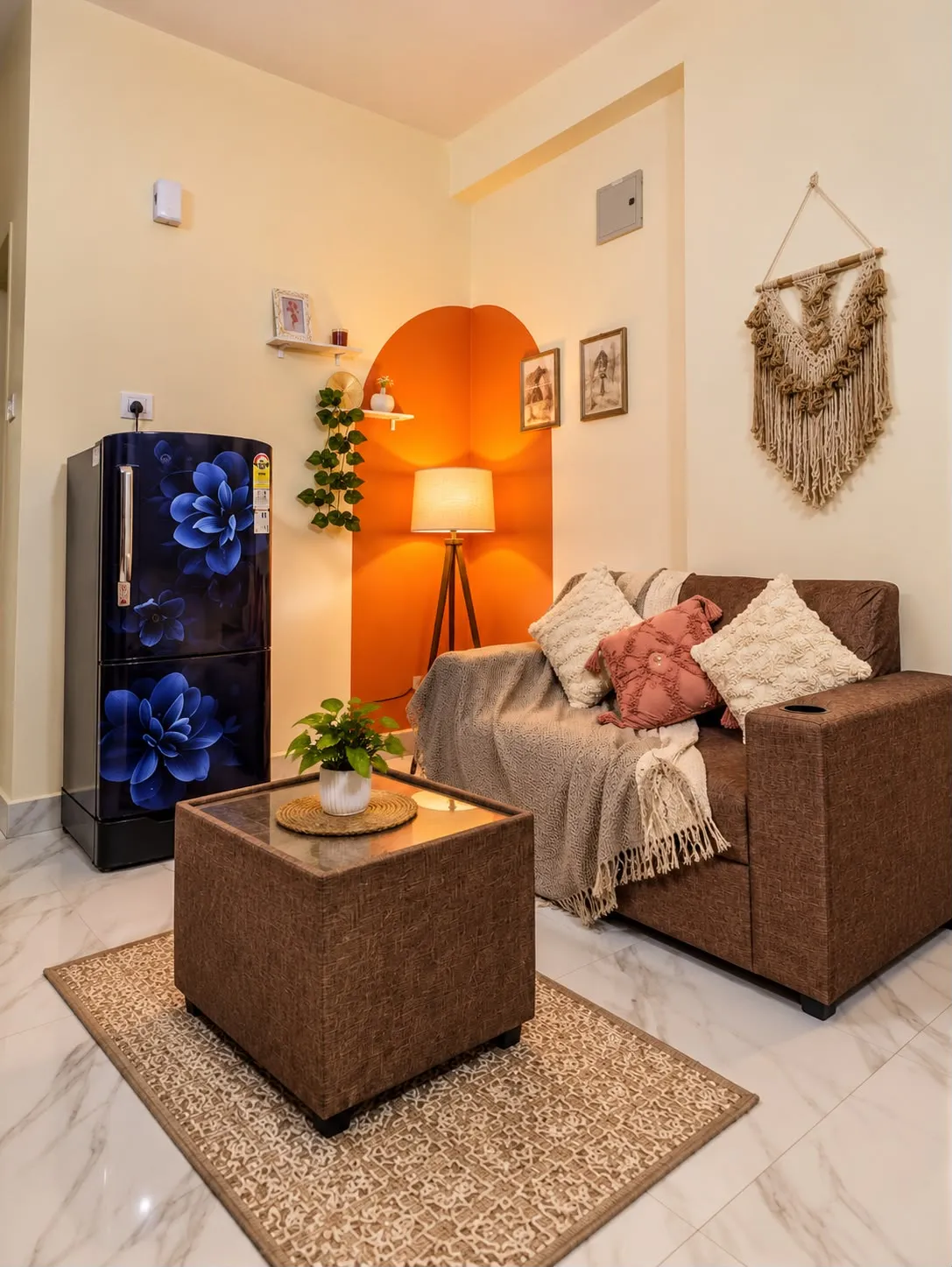
How to Decorate an Airbnb: A Practical Guide From a Host With 8 Listings
Pick a theme, paint with intention, light the room warmly, add art, then photograph it properly. The 5-step approach we use across our listings.
 Operations
How to Clean an Airbnb Between Guests: The Turnover System We Use Across 8 Listings
Linen rotation, a structured 3-hour window, four final checks, stocked supplies and a backup cleaner. The system behind our 4.96 rating.
 India Hosting
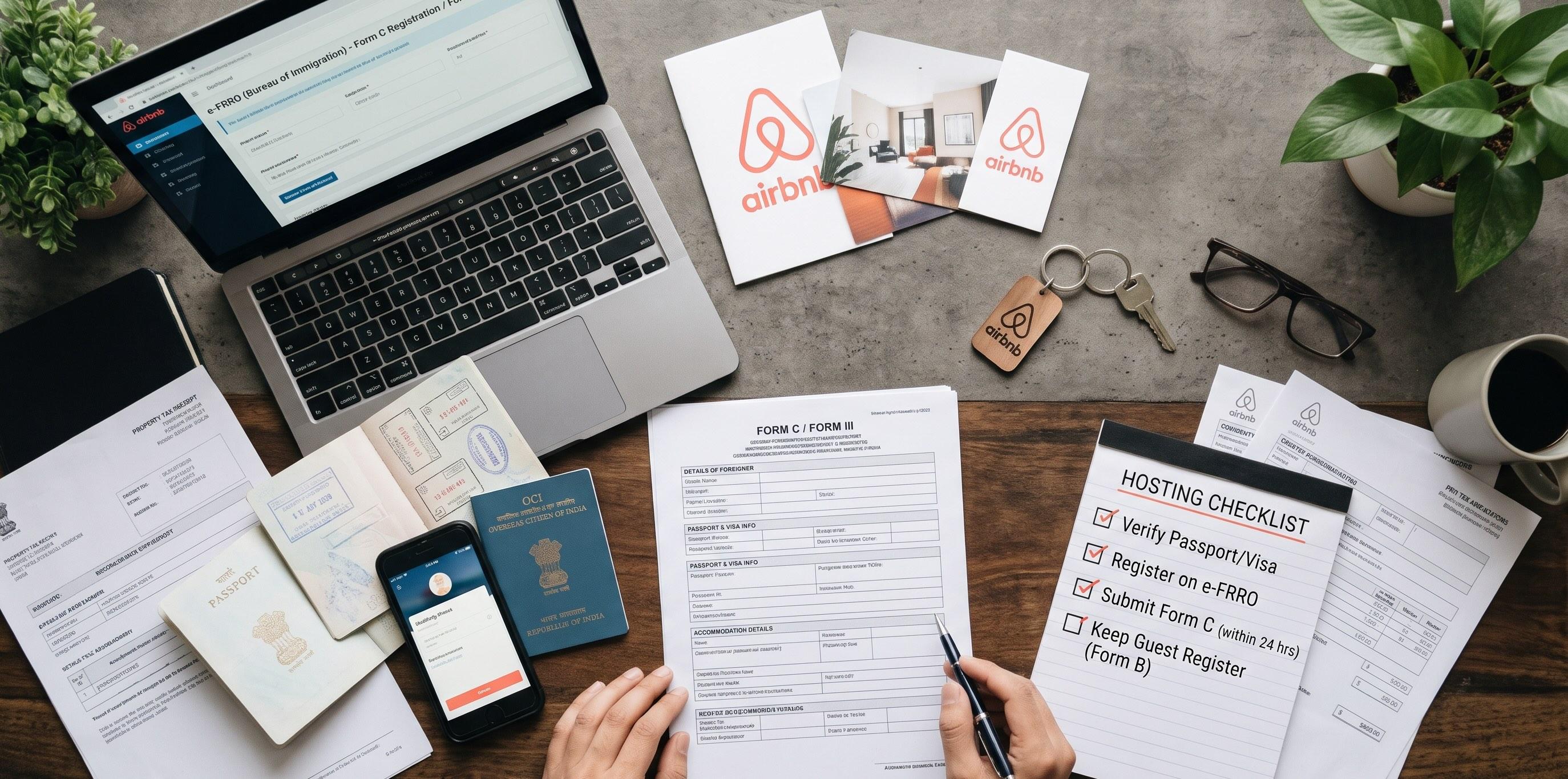
Navigating Form C & Foreign Guest Registrations Without Stress
A complete step-by-step digital walkthrough for filing Form C foreigner portal registrations in under 4 minutes.
Get actionable, field-tested hosting tips.
Real turnover spreadsheets, supplier checklists, and pricing strategy case studies. Zero fluff, 100% operational hospitality data.
Disclaimer: this guide shares my personal experience and general information. It is not legal, tax, insurance or financial advice. Rules, fees and platform policies change, so verify details for your location with official sources or a qualified professional.